When people talk about living abroad, the stories tend to split in two directions. Either everything is impossibly charming — low costs, warm people, sunshine — or it’s framed as a cautionary tale full of frustration and regret.
Real life usually lies somewhere in between.
As we get older, the questions don’t disappear — but the priorities change. They’re less about adventure or reinvention and more about sustainability: safety, healthcare, money that has to last, and what daily life feels like when you don’t have the energy — or the desire — to constantly adapt, hustle, or explain yourself. Most of what you find online doesn’t address that middle space.
This isn’t a guide, and it’s not a sales pitch for Paraguay. It’s a look at what ordinary life here has actually been like for me — the parts that don’t photograph well, the parts that took time to understand, and the parts that surprised me by feeling more normal than expected.
Why Paraguay Wasn’t on My Original List
I’d lived in and spent time around places that tend to come up more often — countries with established expat scenes, recognizable names, and plenty of online reassurance.
When I first started thinking about South America, my attention went where it usually does: toward places known for dramatic landscapes, cultural richness, or a kind of visual appeal that’s easy to fall in love with from a distance. I wasn’t thinking in terms of permanence then. I was still moving, still trying things on, still imagining a home base as something temporary — a place to land between other places.
As time went on, that shifted. Permanent residency started to matter more. So did the idea of having a place that could actually function as a home, even if I continued traveling. Practical considerations began to carry more weight than scenery.
Paraguay didn’t come into view until later, after I’d spent time in countries like Ecuador, Peru, and Albania. By then, what appealed to me had changed. It wasn’t much in the news. It didn’t show up often in travel articles or expat forums. It seemed to sit slightly outside the usual circuits — not especially marketed, not especially explained.
That turned out to be part of the appeal.
I’d grown disenchanted with many of the expat groups I encountered elsewhere — the tone, the complaints, the constant comparisons. The fact that Paraguay didn’t appear to be a popular expat destination made it feel less performative, less crowded with expectations. Combined with a relatively straightforward path to permanent residency, it was enough for me to take a closer look.
What My Days Actually Look Like
Most days here are unremarkable, which I mean as a compliment.
Life moves at a slower, less organized pace than I was used to in the U.S., but not in a romantic way. Waiting is part of the day. Systems don’t always explain themselves. You learn quickly that frustration doesn’t speed anything up.
My days are built around ordinary rhythms: walking to get groceries, navigating small conversations in Spanish, figuring out which tasks are better done early and which simply take the time they take. Noise is unpredictable. So is quiet.
Some things are simpler than before. I don’t own much, and I don’t maintain much. There’s no car to deal with, no appliances or furniture to replace, no small household problems piling up. When something breaks, I tell the owner of the place I’m living in, and it gets handled — usually, eventually, and on someone else’s timeline.
That tradeoff changes how the day feels. Running errands takes about the same amount of time it used to — just on foot instead of in a car. Walking replaces driving, which is less stressful and easier on my body. What’s more unpredictable is whether a task will actually get done, especially when it depends on clear communication in Spanish. Many days things move smoothly. Other days, not so much — tasks stall for reasons that aren’t obvious. I have learned not to expect efficiency, and to allow extra time when something matters.
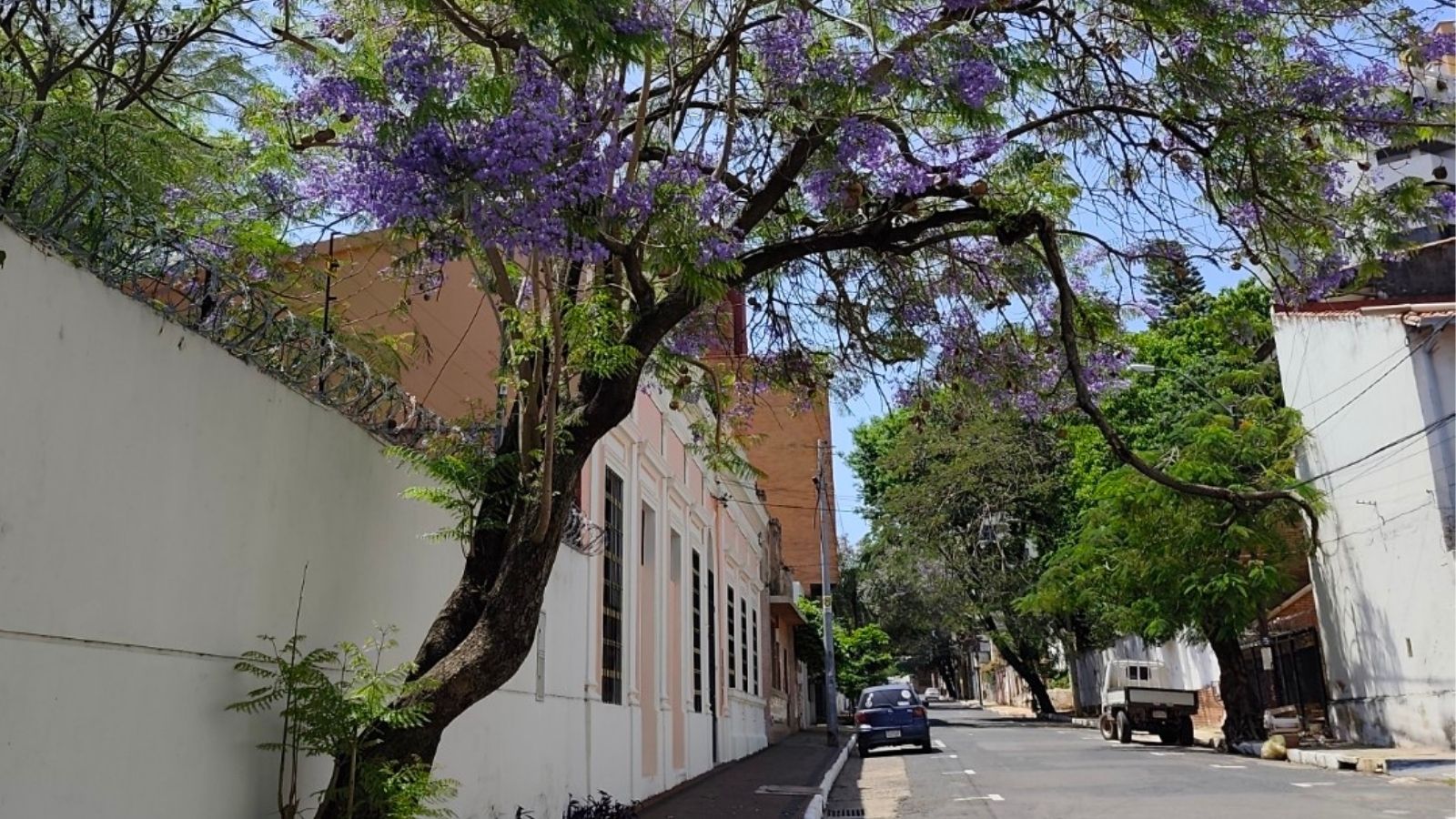
Daily life here doesn’t feel like an extended vacation. Most of the time, it feels like life. Occasionally, that shifts — usually when I’m walking and notice the trees, or when someone greets me in Spanish — small moments that register precisely because the rest of the day is so ordinary.
Cost of Living: Lower — If You’re Willing to Adapt
Paraguay is often described as inexpensive, and that’s true in a general sense. But it isn’t universally cheap, and it isn’t cheap in the same way for everyone.
If you want to live exactly as you did in the U.S. — the same foods, the same comforts, the same habits — you’ll pay extra for that. Imported products are easy to find, but they come at a premium. Some of the things I enjoy most aren’t bargains at all. Nuts, especially pistachios, are more expensive here than they were in the U.S. Good coffee beans cost about the same. Familiar brands and specialty items add up quickly.
Where costs really drop is when you eat and live locally. Basic foods, meals out, services, rent, and utilities are all lower — sometimes significantly. But that choice comes with its own trade-offs. Eating local means accepting that most food is conventionally grown. It’s not always clear what’s been sprayed, or how much. Organic options exist, but they’re limited and inconsistent, and you have to decide how much effort you want to put into tracking them down.
So cost of living here is less about a number and more about selection. I pick my luxuries. I’ve had to decide what matters enough to pay for and what I’m willing to let go of.
I live well on less, a lot less, in Paraguay. But I’ve had to make conscious choices in order to do that.
Safety: What I Pay Attention To — Based on Experience
Safety wasn’t my biggest concern coming to Paraguay. I’d already spent time living in South America, so it wasn’t an unknown. It was still a question — just not the first one.
My biggest concern here has been transportation, specifically taxis. Not because I know they’re unsafe, but because I don’t know enough about them. Instead, I use ride services like Uber and Bolt, which I trust more because of the tracking and accountability. In terms of crime — theft, robbery, kidnapping — I feel safer using those services.
Accidents are a different matter. Seat belts aren’t always functional, and driving can be aggressive. I still feel a low-level tension when I get into a car here, even when I know the driver and the route.
The one time something did happen to me wasn’t dramatic, but it was instructive. My phone was stolen right out of my hands while I was standing on a corner looking at it instead of paying attention to my surroundings. A motorcycle passed by and lifted it cleanly. It was the first time I’d had anything stolen in all my years of traveling — and it happened because I’d grown complacent.
Since then, my approach to safety has been simple: pay attention.
I know which areas I don’t go to at all. There’s a part of the city with a reputation for being dangerous, and I avoid it entirely. On the other hand, I go regularly to El Centro, which some people warn foreigners about. I’ve never felt unsafe there — but I’ve learned which routes feel comfortable and which ones don’t, and I stick to them.
Most of the time, nothing happens. But I stay alert. If someone ahead of me feels off, I change sides of the street or take a different route.
Living here hasn’t made me feel unsafe. It’s made me more aware of my surroundings and more honest about my own habits. The biggest adjustment wasn’t learning new rules — it was remembering the ones I already knew.
Healthcare & Aging Abroad: The Question I Keep Coming Back To
Healthcare is the part of living abroad that I continue to wrestle with in Paraguay.
I’ve lived in places where this question felt easier. In Thailand, the healthcare itself felt exceptional. The hospitals, specialists, and diagnostic tools inspired confidence. It was the first place where I thought, I could age here without constantly worrying about medical care.
I never fully explored the long-term cost or structure of health insurance there. I didn’t need to at the time, so I didn’t push for answers. What stayed with me wasn’t the insurance question so much as how competent and collaborative the care felt when I did need it.
Here, I can get health insurance that’s affordable and accessible. For everyday issues — routine care, infections, minor illnesses — it works reasonably well. Appointments are easy to schedule, and doctors are available without long delays.
The limits show up when I think beyond that. Coverage for major illnesses — heart disease, cancer, anything complex or long-term — is limited. Diagnostic tools and treatment options haven’t caught up to what’s available in more developed systems, and that uncertainty sits in the background.
The doctor-patient dynamic has also been harder for me here. The expectation is clear: the doctor knows what’s best, and I am expected to follow instructions. There isn’t much room for discussion or shared decision-making. That contrasts sharply with my experience in Thailand, where doctors treated me as an informed participant in my own care.
Then there’s distance. Paraguay is far from the U.S., where my children live. It’s not something I think about daily, but it’s part of how I think about aging here.
When I look further down the road, the future is unclear. Living in Paraguay works well for me in many ways, including everyday healthcare, but it doesn’t answer everything. For now, I live with that uncertainty — aware of what works, clear about what doesn’t, and accepting that some parts of this decision will only make sense over time.
Community: Not Built In, Not Missing Either
I didn’t arrive in Paraguay with a ready-made community, and building one has taken time. It’s still evolving, and it doesn’t yet feel as solid as I’d like. Part of that is practical — my Spanish is improving, but it still limits how deeply I can connect.
There isn’t a built-in social structure waiting for you when you arrive, especially if you’re older and living on your own. People are friendly, but that doesn’t automatically translate into friendship. Social life tends to be rooted in family, long-standing relationships, and routines that predate your arrival.
I don’t have a large circle here. What I have is smaller and uneven — a few familiar faces, a handful of people I see regularly, a couple of people I could call if I needed help, and others I recognize but don’t know well. Some days that feels sufficient. Other days it feels thin.
Expat communities exist, but I’ve been cautious about how much I lean on them. In other countries, I’d grown weary of spaces that revolved around complaints, comparisons, or a sense of being temporarily stuck. The smaller expat presence here appealed to me for that reason, but it also means there’s less immediate social scaffolding.
Connection here tends to form through repetition rather than momentum. It shows up in the same walk, the same café, the same errands — seeing the same people often enough that recognition turns into something more. It’s not dramatic, and it doesn’t always deepen. Sometimes it stays familiar, and sometimes familiarity itself becomes the connection.
There’s a café I go to regularly where this has played out in a small but telling way. When I first started going, the barista was polite but not especially warm. An expat couple I know goes there occasionally and finds her unfriendly. I go more often. Over time, she’s warmed up to me. Now we talk in my broken Spanish. She smiles when I come in. It’s not a friendship, exactly — but it’s a connection that grew simply because I kept showing up.
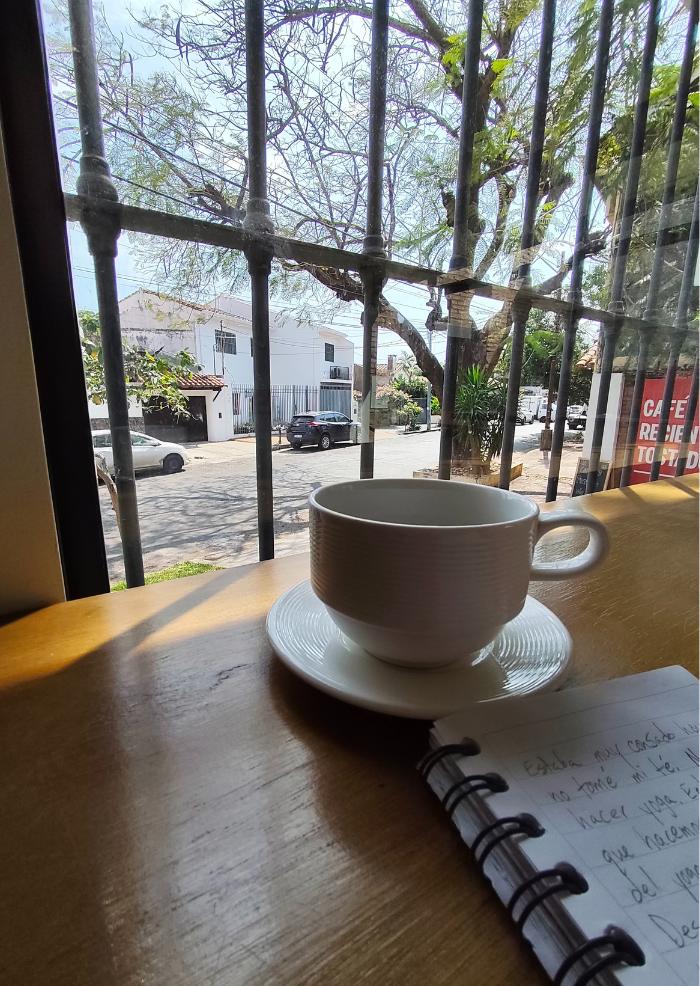
I’ve had the opposite experience elsewhere, too. In another coffee shop, I connected quickly with people and friendships formed more easily. Both have happened here, and neither feels unusual anymore.
Living solo makes this more visible. There’s no built-in buffer at the end of the day, no one to automatically share small frustrations or decisions with. At the same time, there’s less obligation to socialize when I don’t want to. I notice both sides of that freedom.
Community here doesn’t erase loneliness, but it doesn’t amplify it either. I don’t feel surrounded, and I don’t feel isolated. Most days, I feel connected enough.
What Living Here Has Changed — and What It Hasn’t
What hasn’t changed is the restlessness.
I’ve felt it my whole life — the pull to see what’s elsewhere, to imagine another place, another version of daily life. I’ve felt it in the U.S., and I’ve felt it everywhere I’ve lived since. Paraguay didn’t introduce it, and it hasn’t erased it.
What has changed is how I’m responding to it.
Instead of turning that restlessness into plans, I’m staying put. I’m committing to finding out where it comes from and what it’s asking for. I’m paying closer attention to what makes a place start to feel like home — not as an idea, but as a lived experience — rather than assuming the answer is somewhere else.
I still don’t enjoy feeling adrift. I need to feel oriented — to understand where I am, how my days work, and what holds them together. That need hasn’t softened with age. If anything, it’s clearer now.
What also hasn’t changed is my temperament. I’ve always been fairly patient — sometimes more than I should be — willing to accept what’s in front of me and adapt to it. That quality has made it easier for me to live in different countries and adjust to unfamiliar systems. It hasn’t disappeared here, and I don’t think I’d want it to.
Living here hasn’t resolved these traits. It’s just placed them in sharper focus. The restlessness is still there. So is the patience. What’s different is that, for now, I’m choosing not to outrun either of them.
Who Paraguay Might Suit — and Who It Might Not
I hadn’t thought much about who Paraguay might suit and who it might not until I saw a situation where it clearly wasn’t working.
Not long after I arrived, I met a woman in her late seventies who had come here alone. She was recovering from knee surgery and dealing with several serious health issues that had started in the U.S. She arrived with an old cell phone that didn’t support maps or translation apps. She didn’t speak any Spanish. She also had a hearing issue that made it difficult for her to understand even other Americans.
Day to day, she was almost completely dependent on the kindness of English-speaking strangers. Not because people were unkind, but because she had no reliable way to navigate, communicate, or advocate for herself. She struggled to understand what was happening around her, and she didn’t have the tools to compensate for that.
Watching her made something very clear to me: independence matters here in practical ways. Having basic tools in place — working technology, some ability to communicate, and enough physical and cognitive capacity to manage daily tasks — makes a real difference. Without those, even simple things become hard to manage.
Choosing a Place to Stay
I chose Paraguay because I think I can make it my home — not just a place to pass through.
That’s a new mindset for me. I don’t remember ever fully committing to a place as a long-term home. Even when I stayed somewhere for years, I always had moving in the background as a backup plan. Another place. Another option.
Living here has made me more aware of that habit.
For now, Paraguay feels like a place I could stay — a place I could continue building a life, at least as long as I can find ways to live with the realities of aging here. I don’t yet know where that line is, or what would make staying no longer workable.
Letting go of the backup plan feels unfamiliar. I’m starting to see how always keeping an exit open makes it harder to form deep connections — with a place, with people, and with daily life itself.
I don’t know if this will be my permanent home. I do know that, for the first time, I’m treating a place like it might be.
If this kind of lived, unfiltered perspective is helpful, I write about life abroad — the practical and the personal — in my newsletter.